

What's Really Happening in a Grocery-Store Meltdown
Overview
Halfway down the cereal aisle, they start to unravel. The noise, lights, and crowd collide—and suddenly it's tears, clinginess, or collapse. Five brain and body systems are maxing out at once. See how sensory, emotional, executive, motor, and communication systems interact when the world gets too loud.
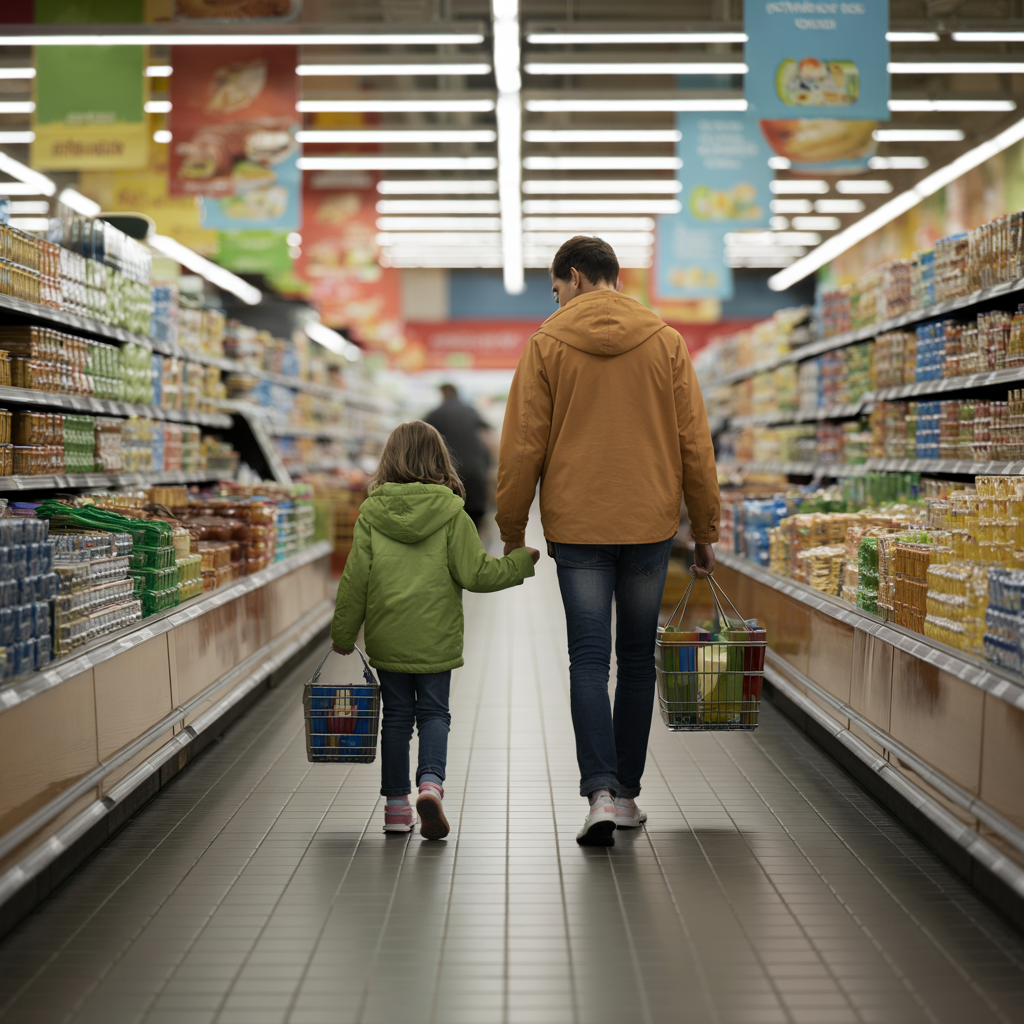
They were fine in the car. Chatty, even. You got through the parking lot, grabbed a cart, made it maybe two aisles in.
Then something shifted.
By the cereal aisle they're clinging to your leg. By the dairy section it's full collapse — tears, or shutdown, or a very loud announcement about how they want to leave right now.
And you're standing there trying to figure out what happened, because nothing happened. You didn't do anything differently than last Tuesday, when the same trip was completely fine.
What's Actually Going On
A grocery store hits five brain and body systems at once.
Fluorescent lights, competing sounds, smells, the physical work of navigating a crowded space, "stay close," "don't touch that," remembering what you came for — all of that is running simultaneously. At school or home, the environment has predictability built in. Here, your child's nervous system is managing a space where none of the variables are under control.
For kids whose systems take in more — more sound, more movement, more visual noise landing harder than average — the load accumulates fast. The sensory system gets overwhelmed first, which takes down emotional regulation next, which leaves executive function with nothing to work with. Language usually goes last. By the time you're hearing "I want to go home," that's the only sentence left.
The meltdown isn't a mood swing. It's a sequence. And it started before you noticed anything was wrong.
Why This Store and Not Every Store
Predictability matters more than you might expect for a nervous system that's already working hard.
The grocery store is unpredictable by design — different crowds, different noise levels, different layouts depending on what's been restocked. Your child's brain is constantly adjusting to new input rather than settling into a pattern. That adjustment costs something. And on a day when the load is already high coming in — a hard morning, a long week, not enough sleep — there's not much left to spend.
Which is why the same trip goes fine one Tuesday and falls apart the next. It's not the store. It's what they walked in carrying.
What Helps in the Moment
Lower the input before trying to redirect. Step away from the crowd, find a quieter spot, reduce visual noise if you can. Don't ask questions yet — language access is offline and questions add demand to a system that's already maxed out.
Let the nervous system come down before you ask it to do anything else. Movement can help — something to push or carry. So can something predictable: a familiar snack, your hand, staying close without talking.
The conversation about what happened can wait until you're back in the car.
What to Notice Next Time
Which trips go fine and which don't? How long before things start to shift — ten minutes, twenty? What brings them back fastest — space, movement, something to hold, food?
That's not just useful for grocery stores. It's your nervous-system map for everywhere else too.
If you want a structured way to track those patterns, the Tools for Noticing is built exactly for this.