When Everyday Moments Keep Feeling Hard

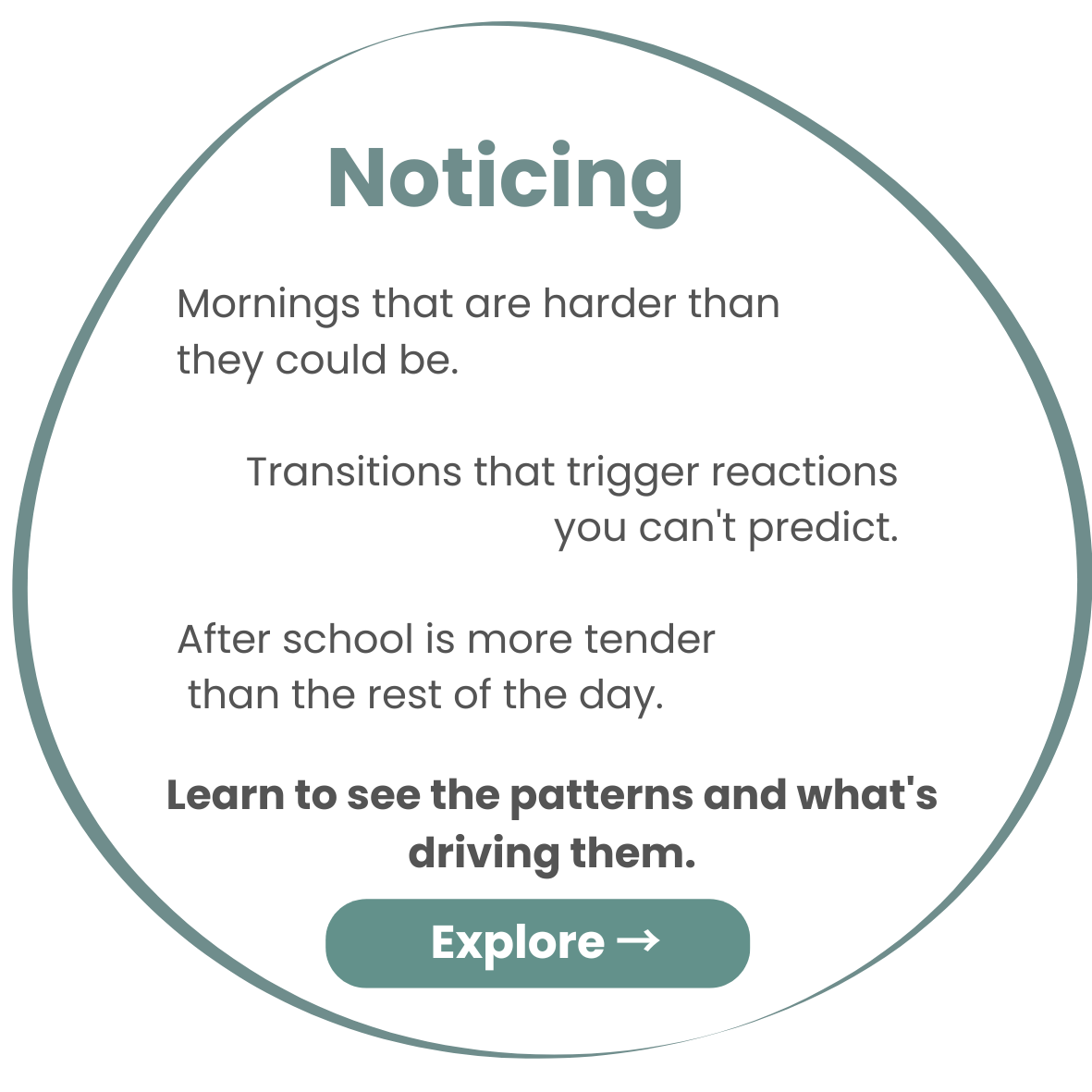
Mornings. After school. Transitions. Certain places.

Little Brains & Bodies helps parents understand the brain and body systems shaping those patterns and what to do with that knowledge. At home, at school, or both.

Where Do You Want to Start?

Not every parent is in the same place.
So you don't have to start in the same place.

Some families want to understand what's driving the pattern first. Some are already adjusting things and want to know if they're getting warmer. Some need school on the same page. Little Brains & Bodies meets you wherever that is.
Hover over each circle to learn more →
Interactive Venn Diagram
WHAT PARENTS SAY

The pattern finally made sense.

Clarity about what's actually happening and what to do with it.

"Bedtime was the same battle every night. Didn't matter what we tried, what order, how many times. Some nights she'd turn the whole thing into a game, some nights just... no. We take a different approach now because we understand it differently. We've all felt the pressure release a bit."
A
Ash C.
Parent of a 4-year-old
"I've got three kids. I thought by now I'd have a pretty good read on things. But there's always something underneath you have to dig out. I just needed a better way to get at it."
J
Colleen B.
Parent of a 7-year-old
THE PARENT JOURNEY

From noticing to knowing to doing.

Most parenting resources skip the middle part. Little Brains & Bodies slows down there. Because understanding what's driving a pattern is what makes everything else land.

1

You notice a pattern

The same moments keep happening. Mornings. Transitions. Certain places. You start to wonder if there's something underneath it.

2

You understand what's driving it

Little Brains & Bodies helps you see which systems are shaping what you're observing - without pathologizing or diagnosing.

3

You know what to do with that

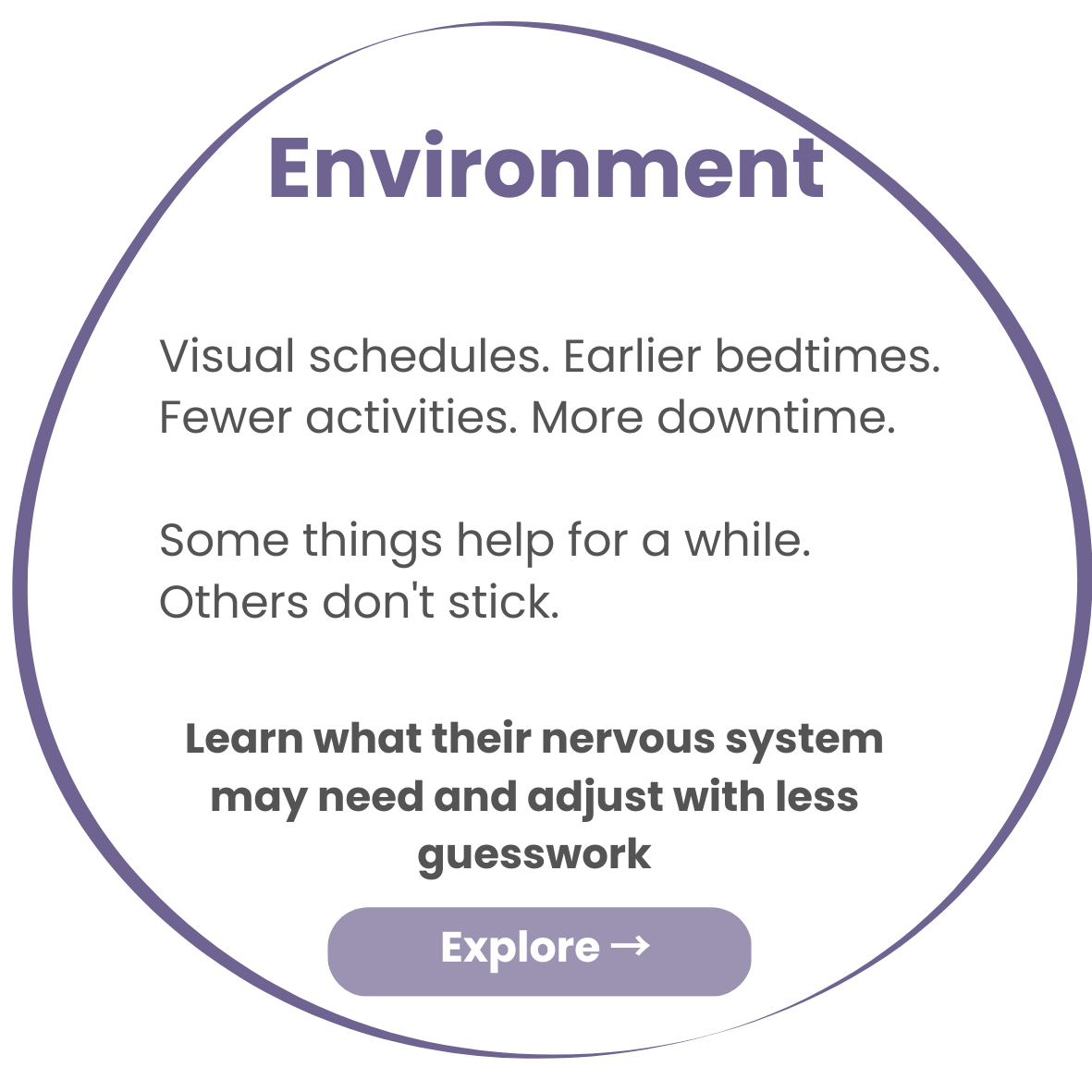
Adjust the environment. Talk to school with confidence. Stop guessing and start making changes that actually fit your child.

READY WHEN YOU ARE

Not every entry point looks the same.

If you're not ready to figure out the full picture right now, the free resources build a solid foundation. We're here when you're ready to take the go deeper.  

COMMON QUESTIONS

Things parents usually want to know before they start.

What is Little Brains & Bodies?

Little Brains & Bodies is a parent education platform that helps families understand the brain and body systems shaping their child's everyday behavior — without diagnoses, labels, or clinical framing. It uses a five-domain framework — sensory processing, emotional regulation, motor coordination, executive function, and communication — to help parents make sense of the patterns they're already noticing and understand what's happening beneath the behavior, so the adjustments you make at home and at school actually fit your child.

Who is Little Brains & Bodies for?

Little Brains & Bodies is for parents and caregivers of children roughly ages 2–8 who are noticing confusing or repeating patterns in behavior — especially around transitions, routines, and certain environments — and want to understand them. Many families who find us share that something feels different but they're not sure what to do with that yet. That's exactly the right starting point.

What are the Five Domains?

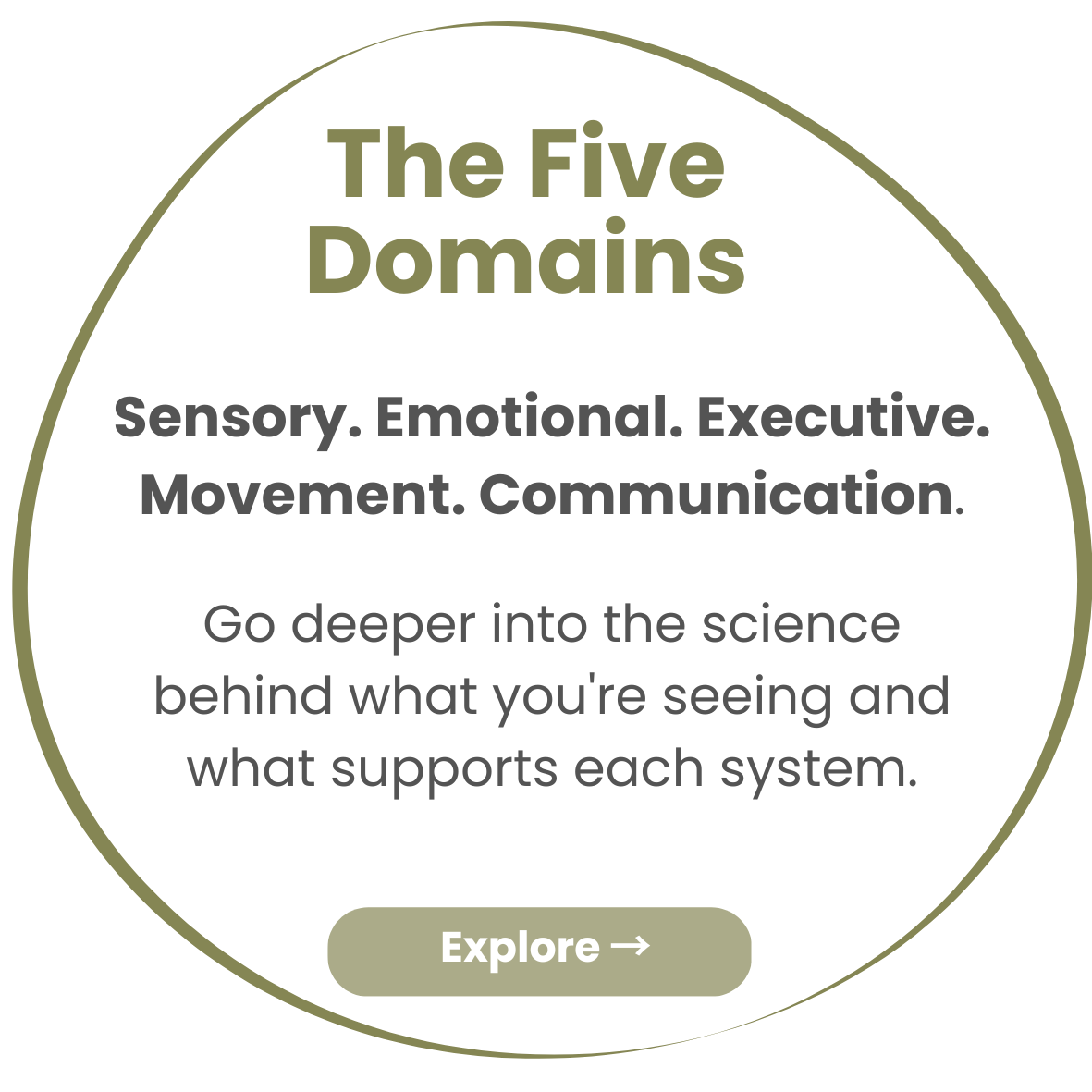
The Five Domains are the five interconnected brain and body systems we use as a lens for understanding children's behavior: sensory processing, emotional regulation, motor coordination, executive function, and communication. These systems don't operate independently — sensory input shapes how regulated a child feels, which directly affects their executive capacity, which shapes how they communicate and respond. Little Brains & Bodies helps parents see how these systems interact in their specific child, in specific situations, so they're working with a fuller picture rather than one piece at a time.

But why does my child fall apart after school every day?

After-school meltdowns are one of the most common patterns parents notice — and one of the most misunderstood. What looks like a behavior problem is often a nervous system running on empty. Children spend the school day managing sensory input, social demands, transitions, and cognitive load simultaneously. By the time they get home, the regulated state they've been maintaining collapses. Understanding which brain and body systems are most taxed during the school day is often the first step toward making afternoons a little easier.

Does my child need a neurodivergent diagnosis to benefit from Little Brains & Bodies?

Not at all!
Little Brains & Bodies is designed to be useful whether or not your child has a diagnosis. The five brain and body domains apply to all children. A diagnosis can be a useful map, but it's not a prerequisite for understanding your child's nervous system. Many families have never pursued a diagnosis and aren't planning to. Others are in the middle of an evaluation process. Others have diagnoses and want a framework that goes deeper than the label. All of those are valid entry points.

Is this a replacement for occupational therapy or other clinical services?

No. Little Brains & Bodies is an educational platform, not a clinical service. It doesn't assess, diagnose, or treat. What it does is help parents understand the brain and body framework that underlies many therapeutic approaches — which often makes clinical work more effective, not less necessary. Many families find that we bridges the gap between therapy sessions, helping them understand the "why" behind strategies their OT or speech therapist recommends so they can carry those approaches into daily life more confidently.

How is Little Brains & Bodies different from other parenting resources?

Many parenting resources offer strategies — scripts, routines, behavior plans. Little Brains & Bodies offers a framework for understanding first, and then strategies that make sense given what's underneath. The difference matters because scripts work situationally. Understanding works across contexts. We are deliberately non-prescriptive. We give parents a structured way to observe, interpret, and respond to their own child, in their own environment.

How do I use this to work better with my child's school?

The School Partnerships toolkit is built specifically for this. It gives parents brain and body language that translates to educators — concrete, grounded descriptions of what's happening for a child that teachers and administrators can actually work with. It includes meeting preparation templates, follow-up communication guides, and frameworks for building a shared picture of your child across home and school. The goal isn't to arrive with demands — it's to arrive with clarity, so everyone is working from the same understanding of the child rather than different interpretations of the same behaviors.